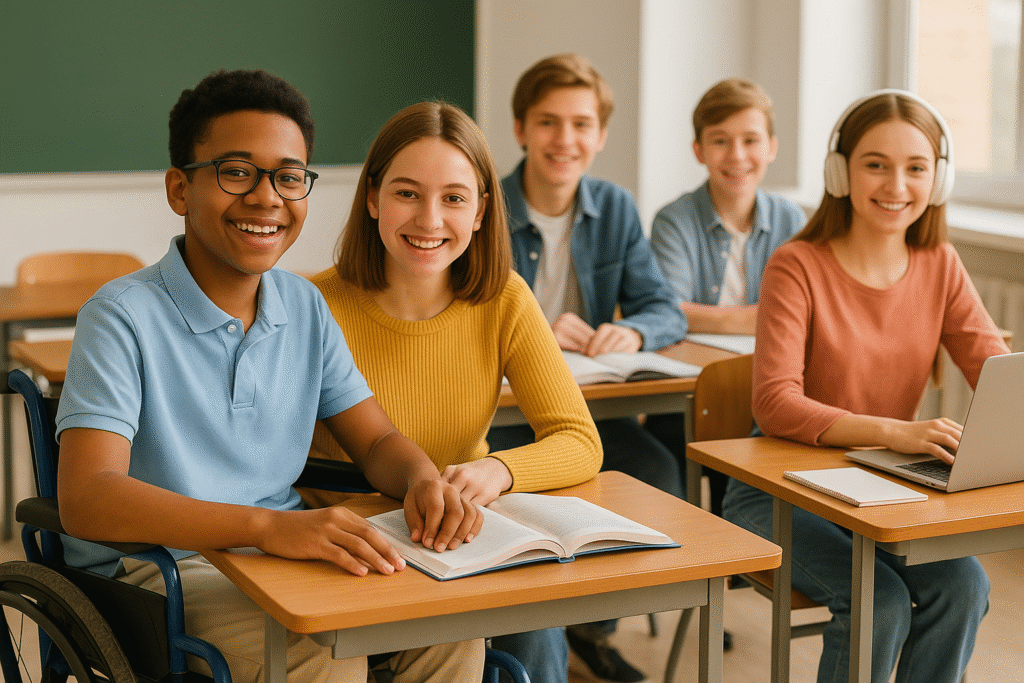
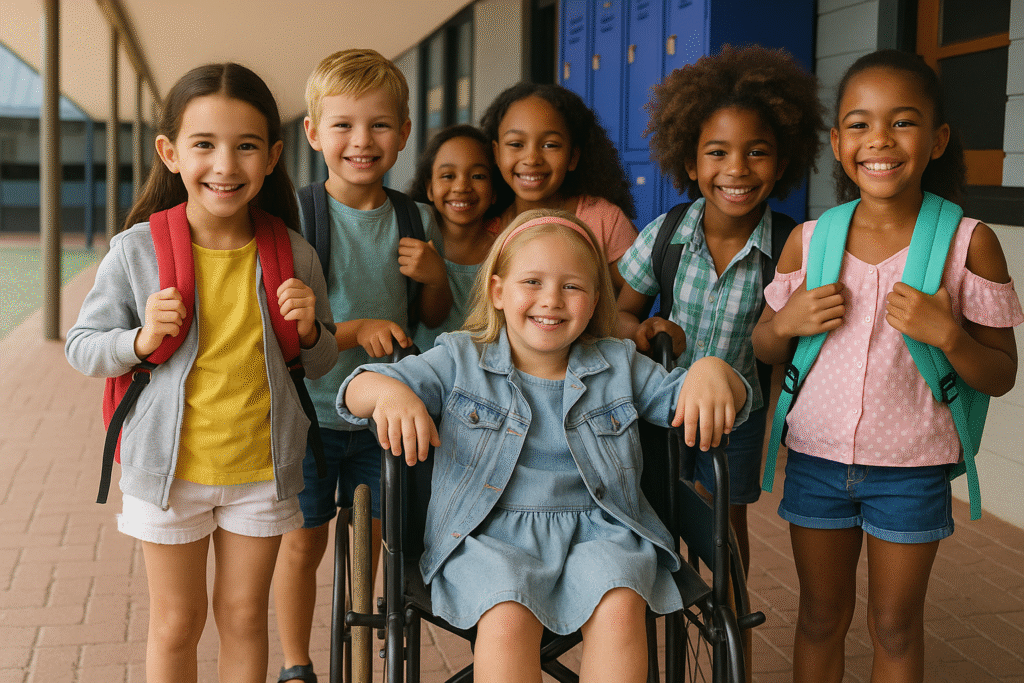
Students with impairments attend the same schools and classes as their counterparts without disabilities thanks to inclusive education. It guarantees meaningful involvement, acceptable accommodations, and respect for diversity—it goes beyond simply pairing kids.
Inclusive Education for Students with Disabilities: Building a Better Future for All
A dedication to equity, decency, and empowerment, inclusive education is more than just a theory. It guarantees that all students have equal access to high-quality education in a nurturing setting, irrespective of their physical, sensory, intellectual, or emotional disabilities.
Solutions for Successful Inclusion
Teacher training in inclusive methods
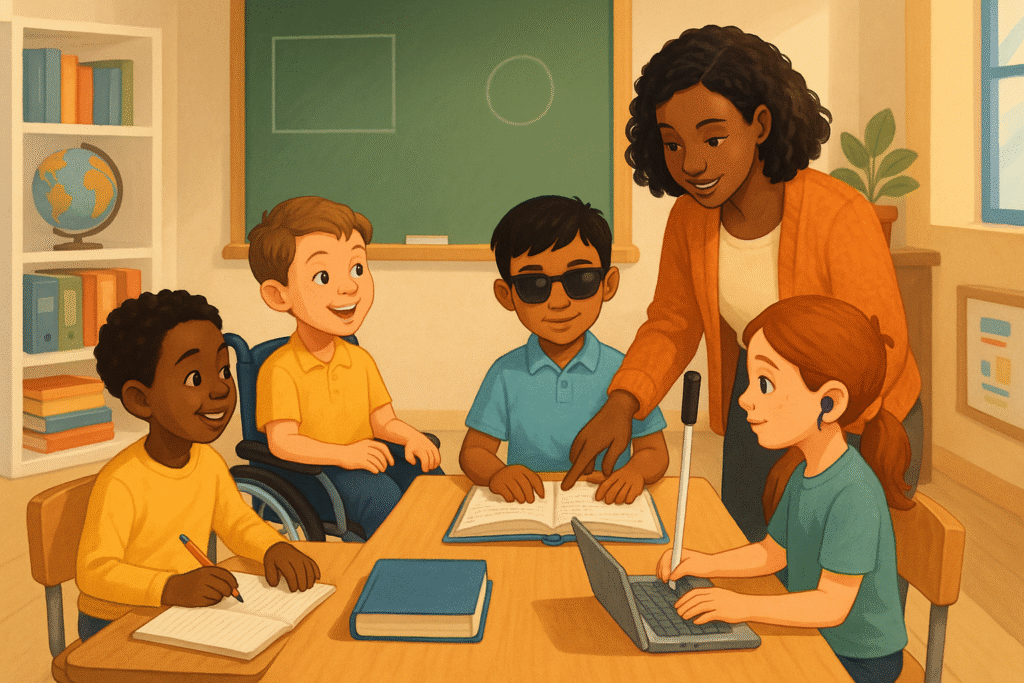
Use of assistive technologies like screen readers and Braille books
Universal Design for Learning (UDL) principles
Peer support programs
Community awareness campaigns
Parent and Community Engagement in Disability Inclusion
Inclusive education goes beyond the walls of a classroom. A truly inclusive environment is one where parents, caregivers, and the community actively participate in supporting children with disabilities. Parents know their children best. When schools collaborate with families, they can better understand a child’s strengths, needs, and aspirations. This leads to more personalized learning plans, stronger emotional support, and improved academic outcomes. When communities create accessible environments, offer inclusive events, and encourage disability awareness, it fosters empathy and equality. From inclusive playgrounds to community centers with ramps and sign language interpreters, these efforts break barriers. Inclusion is not a one-person job. It takes a village of teachers, families, neighbors, and friends working together. When parents and communities are involved and informed, children with disabilities thrive—academically, emotionally, and socially.
Real-Life Impact
In schools where inclusive education is well-implemented, students with disabilities:
Show higher academic performance
Have better social interaction skills
Experience increased self-confidence and motivation
Call to Action
Inclusive education is everyone’s responsibility. Whether you’re a teacher, parent, policymaker, or student—you can be part of the change.
Support schools that implement inclusive practices
Advocate for accessibility in your community
Celebrate diversity in classrooms
Voices That Matter
“In their success, we find our hope.” — A reminder that every child’s growth enriches society as a whole.